Perth Property in a Downturn: What Owners and Landlords Need to Know
The Perth property market was the standout for five years. Now it is falling with the rest of the country. Cotality’s October housing webinar, “Navigating the downturn”, explains why, and what it means for you.
The short version
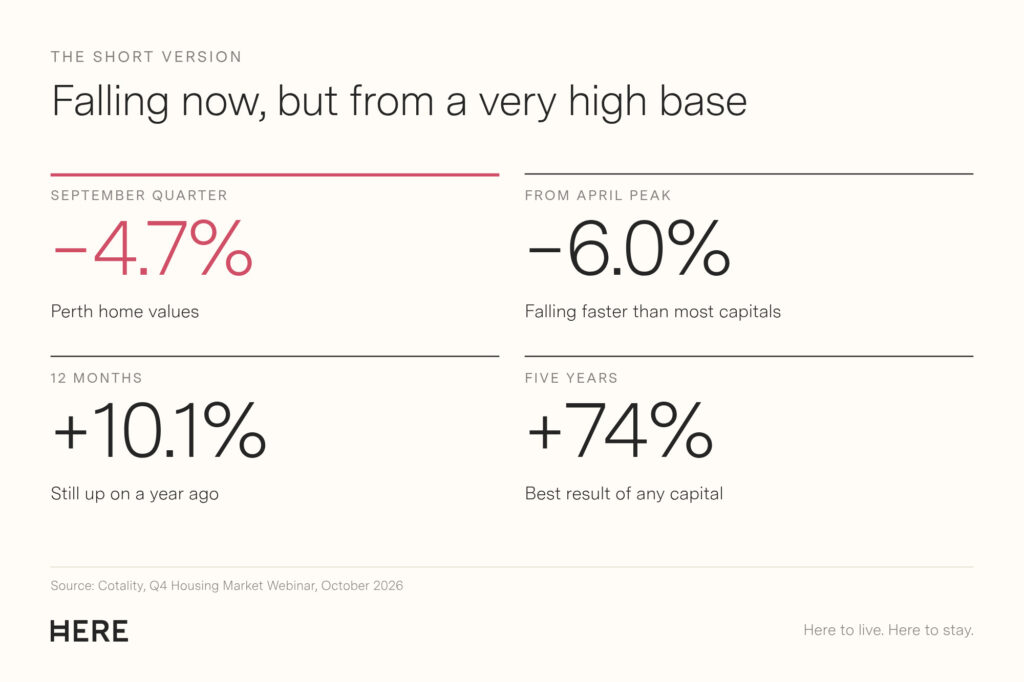
- Perth values fell 4.7% in the September quarter and are 6.0% below their April peak.
- Perth is still up 10.1% over 12 months and 74% over five years, the best five-year result of any capital city.
- Perth rents are still rising and vacancy is tight (2.1%).
- Cotality expects further softness through the rest of 2026 and into 2027.
The national picture
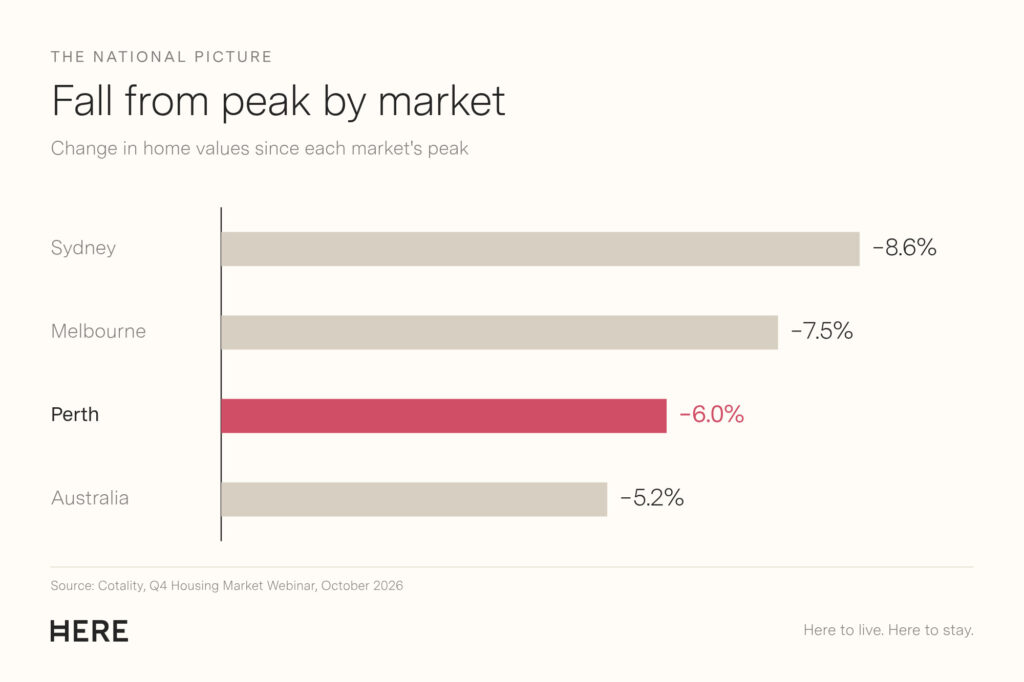
Australian values peaked in March and have fallen 5.2% since. Sydney is down 8.6% from its peak and Melbourne 7.5%. Perth, Brisbane and Adelaide turned later, but they have caught up quickly, and Perth is now falling almost as fast as Sydney. Every capital except Darwin recorded a fall for the quarter. Cotality calls it a demand-driven downturn, with no sign of panic selling.
Why is it happening?
Cotality describes layers of pressure building on buyers over the past year:
- Affordability. Rapid price growth outran incomes. Servicing a new Perth mortgage now takes about 52.9% of household income, with values at 8.9 times income.
- Interest rates. The RBA has now lifted rates four times, most recently on 29 September, taking the cash rate to 4.60%. Another rise is widely expected on Melbourne Cup Day.
- Cost of living and confidence. Energy costs have risen, and consumer sentiment is deeply pessimistic. Cotality notes that uncertainty keeps even well-funded buyers on the sidelines.
- Investor demand. Investors made up around 40% of lending before the May federal budget. Changes to negative gearing and capital gains tax, combined with higher rates, have cut investor activity sharply.
What it looks like in the Perth property market
Perth looked almost bulletproof at the start of the year, and the turn has been fast. Perth home values are falling by more than 1% a month, and nearly every Perth suburb recorded a fall in the September quarter. Over the past 12 months the strongest growth was on the outer fringes, including Wanneroo, Mandurah, Rockingham and Armadale. That insulation has faded. The gap between the cheapest and most expensive parts of the market has narrowed, with all segments now falling at a similar pace.
The market has also slowed:
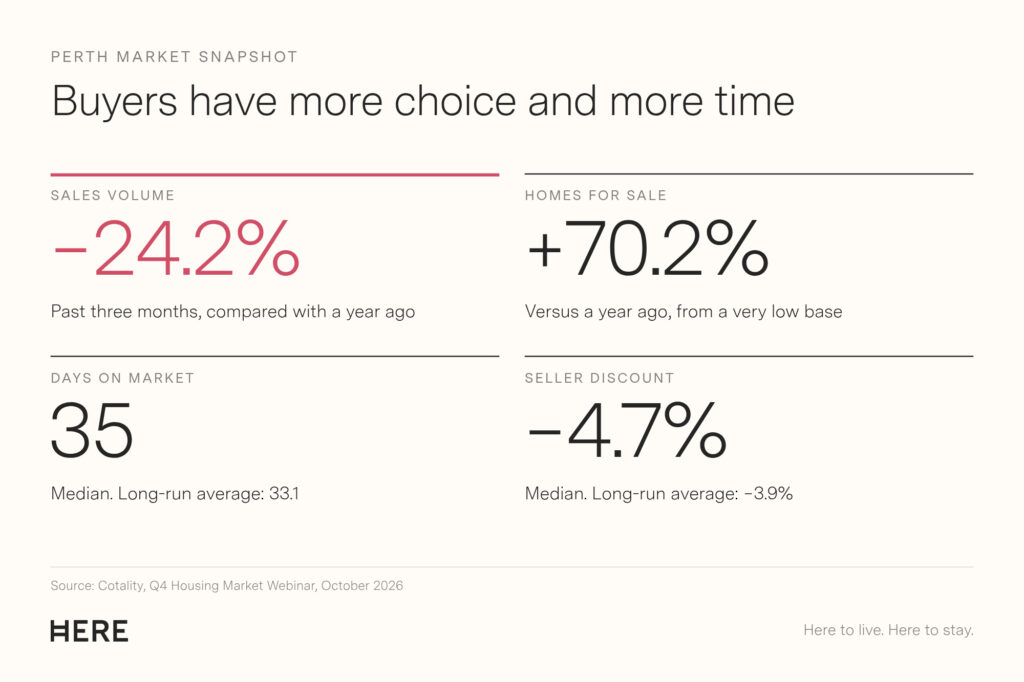
- Sales volumes are down 24.2% on a year ago.
- Advertised stock is up 70.2% on a year ago, from a very low base, so buyers finally have choice and less urgency.
- Median days on market is 35, and the median vendor discount has widened to 4.7%.
- Only around 2% of Perth homes sell at auction, so most sales are private treaty negotiations.
- New listings are 10.6% below the five-year average, because many owners are choosing to wait rather than sell.
Context: Perth is falling from a very high base
Even a severe 20% fall from the April peak would only take the Perth property market back to April 2025 values. Most Perth owners have built up substantial equity. Melbourne, by comparison, is below its values of five years ago.
What it means for landlords
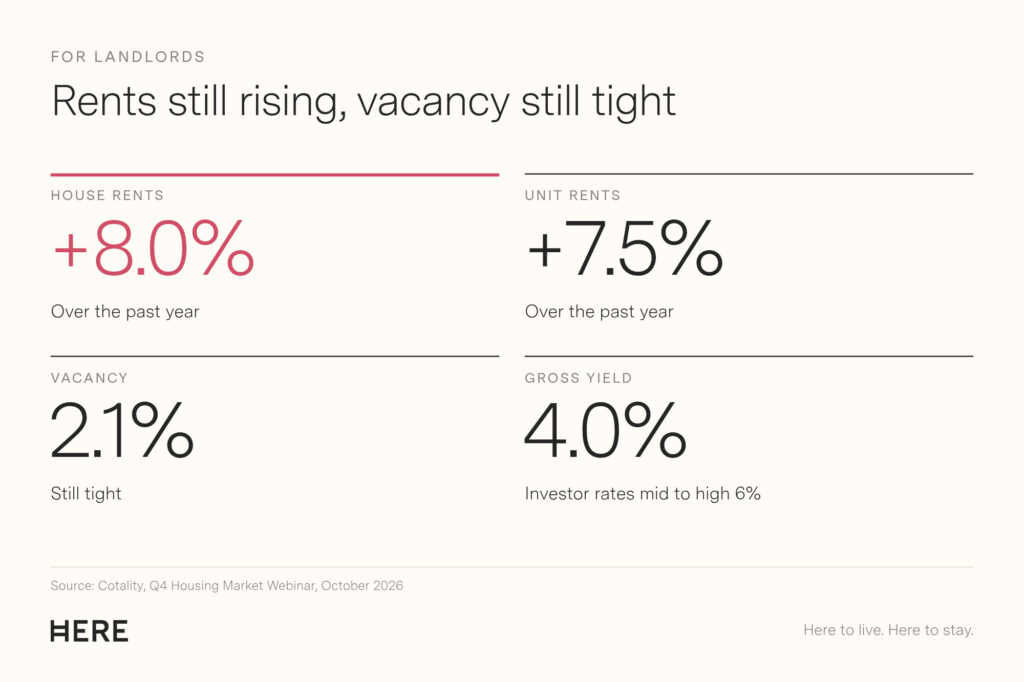
Perth house rents are up 8.0% over the year and unit rents 7.5%, though national rental growth has eased to 5.5%. Gross yields have lifted to about 4.0% in Perth, but with investor mortgage rates in the mid-to-high 6% range, highly leveraged investors may still be cash flow negative. Cotality also flags that rent growth has not yet shown up in official CPI figures, and that may follow with a lag of up to 12 months.
Will it get worse, and for how long?
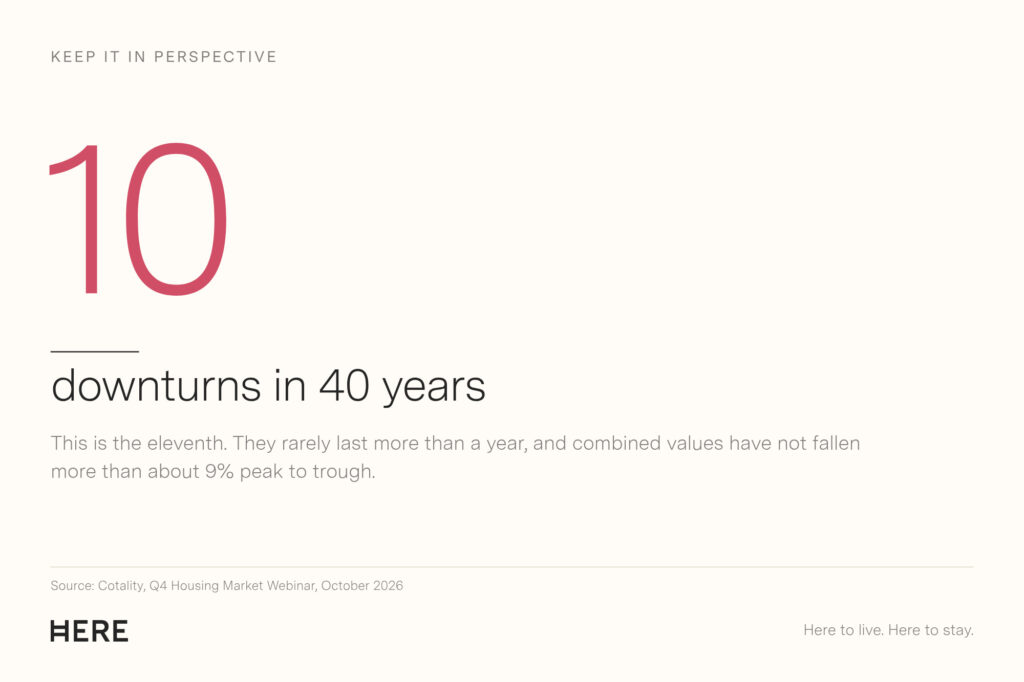
Australia has had 10 downturns in 40 years, and this is the eleventh. They rarely last more than a year, and combined capital values have not fallen more than about 9% peak to trough. Perth’s own history is more varied, including a long slide from 2014 to 2019. Cotality’s view is that markets will likely lose further value through the rest of 2026 and into 2027. Several things help keep a floor under prices:
- Home building remains well short of what is needed, and labour is tight because of competition from major infrastructure projects.
- Roughly a third of Australian households own their home outright and feel little direct pressure from rate rises.
- Most Perth owners have strong equity buffers.
What to do now
- Not planning to sell? You can generally look through the cycle.
- Thinking of selling? Price realistically from day one. Buyers have choice and time, and overpriced homes sit.
- Landlords: Rents and vacancy still favour owners, so a well-presented, properly priced and well-managed property is your best protection.
Talk to the HERE Property team about your property and your plans.
Source: Cotality Q4 Housing Market Webinar, October 2026. General information only, not financial advice. Speak to a licensed adviser about your circumstances.